 Marcus FeldEditor-in-Chief
Dark Streetwear & Accessories Review: Color & Styling
The key to dark streetwear styling isn't making every piece the same black; it's building layers between deep navy, charcoal, black-gray, and white, then adding a few bold graphics for visual focus. Using a flat-lay scene as reference, I'll break down the color pairing, outfit combination, and display methods. ## Color Pairing: Dark Base with a Single High-Contrast Point The scene uses charcoal and black as the main background, with a deep navy top providing a softer color shift than pure black.
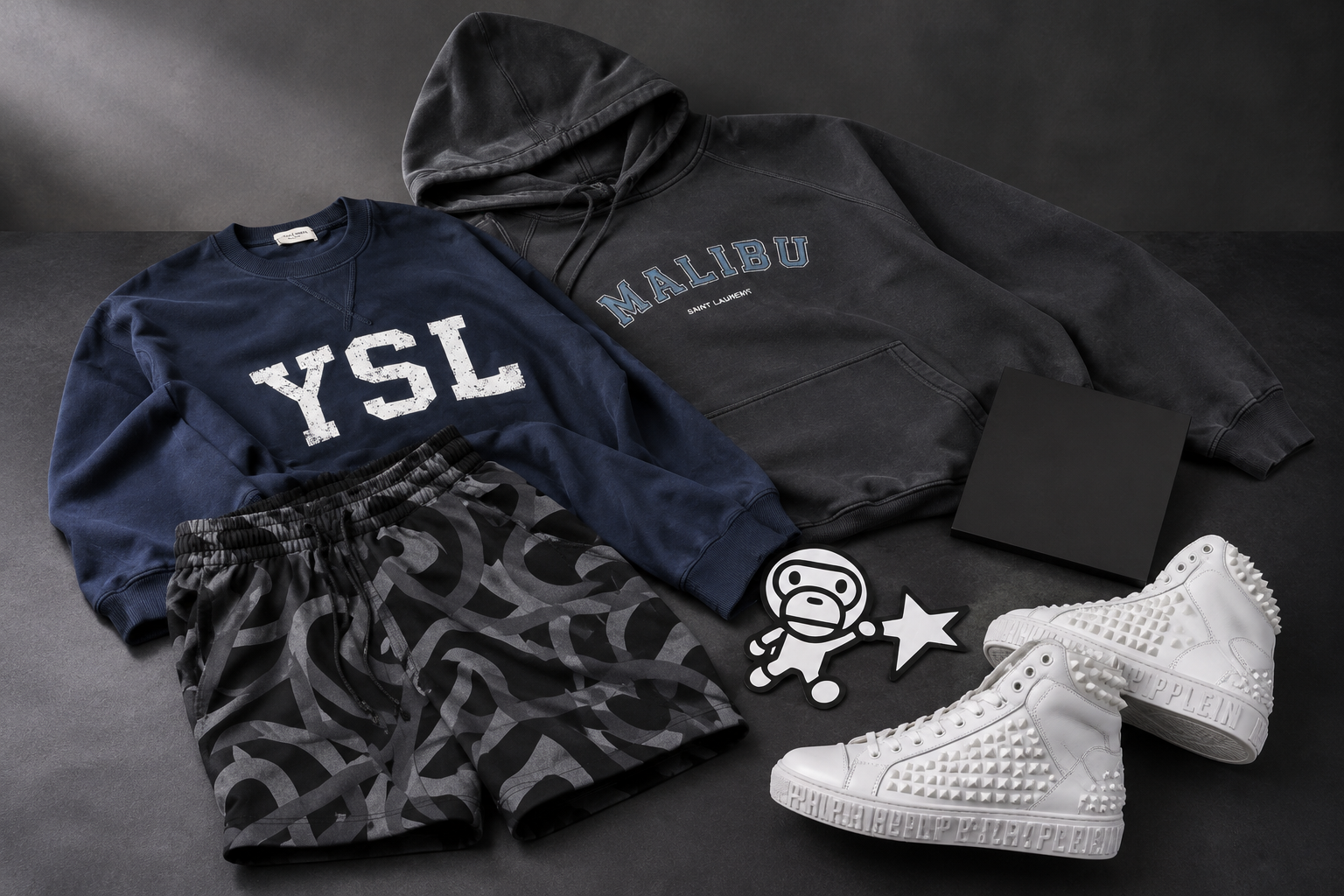
Editor score 4.2 / 5
The key to dark streetwear styling isn't making every piece the same black; it's building layers between deep navy, charcoal, black-gray, and white, then adding a few bold graphics for visual focus. Using a flat-lay scene as reference, I'll break down the color pairing, outfit combination, and display methods.
Color Pairing: Dark Base with a Single High-Contrast Point
The scene uses charcoal and black as the main background, with a deep navy top providing a softer color shift than pure black. The large white lettering graphic on the chest creates a clear focal point and keeps the dark top from feeling dull.
To replicate this direction, you can use a three-layer color scheme:
- Main colors: charcoal, black, or deep navy to set the overall mood.
- Secondary colors: black-gray abstract textures to add variation to shorts or bottoms without breaking the dark base.
- Accent colors: white sneakers, white graphics, or light lettering to concentrate the contrast.
White sneakers act as the brightening element in the whole set. The dimensional embellishments on the upper and sole are quite striking, so the top doesn't need too many vibrant colors, or it would weaken the shoes as the visual center.

Outfit Combination: Control the Number of Graphics and Separate Top/Bottom Emphasis
The deep navy crewneck top has a large white lettering graphic, so it pairs well with relatively understated dark bottoms. The black-gray abstract textured shorts have wide pattern coverage, but the colors are kept within black and gray, so they can create a street vibe with the navy top without competing too much in color blocks.
The charcoal hoodie has a hood, drawstrings, and front pocket, with natural fading and wrinkles on the body and cuffs. It's better placed as an outer layer at the back of the outfit, providing a wider silhouette and more details. If you use a lettering graphic top underneath, you can let the collar, hem, or part of the graphic show to add depth.
The white short-sleeve top with black collar and cuff trim, plus a red star graphic, will create stronger contrast. If you add it to the same outfit, keep the red as a localized accent and reduce other colorful accessories so the star stays clear.
Display: Gradually Narrow from Large Garments to Small Accessories
When flat-laying, start with two tops as the main pieces: place the hoodie at the back or top, and the crewneck in front, creating size and shade variation. Put the shorts below, using the waistband, drawstrings, and leg openings to connect the top and bottom.
Shoes are best placed on the edge or bottom of the frame, using their white volume to balance the dark clothing. Small decorative objects can be placed between the clothing and shoes, but leave spacing to avoid overlapping cartoon characters, star graphics, or black rectangular objects with the garment prints.
A practical display order:
- First determine the positions of the largest pieces: the hoodie and crewneck.
- Then fill the lower space with the shorts, creating a diagonal or slightly offset composition.
- Place white sneakers on the visually heavier side to balance the dark garments.
- Finally add small decorative objects as close-up details, not the main focus.
What to Look for When Choosing
This kind of scene clearly shows the top silhouettes, cuffs and hems, hood and front pocket, waist structure of the shorts, graphic placement, and sole and upper embellishments. It's useful for deciding if you like the dark base, graphic density, and overall display style.
But flat-lay photos alone cannot show the lining, fabric composition, hand feel, actual thickness, fit, size compatibility, or shoe comfort. If you're ready to choose further, prioritize checking specific measured sizes, size charts, fabric specifications, inner shoe structure, and close-ups of detail areas.