 Marcus FeldEditor-in-Chief
Black Track Suit Flat-Lay: Reflective & Zip Detail Review
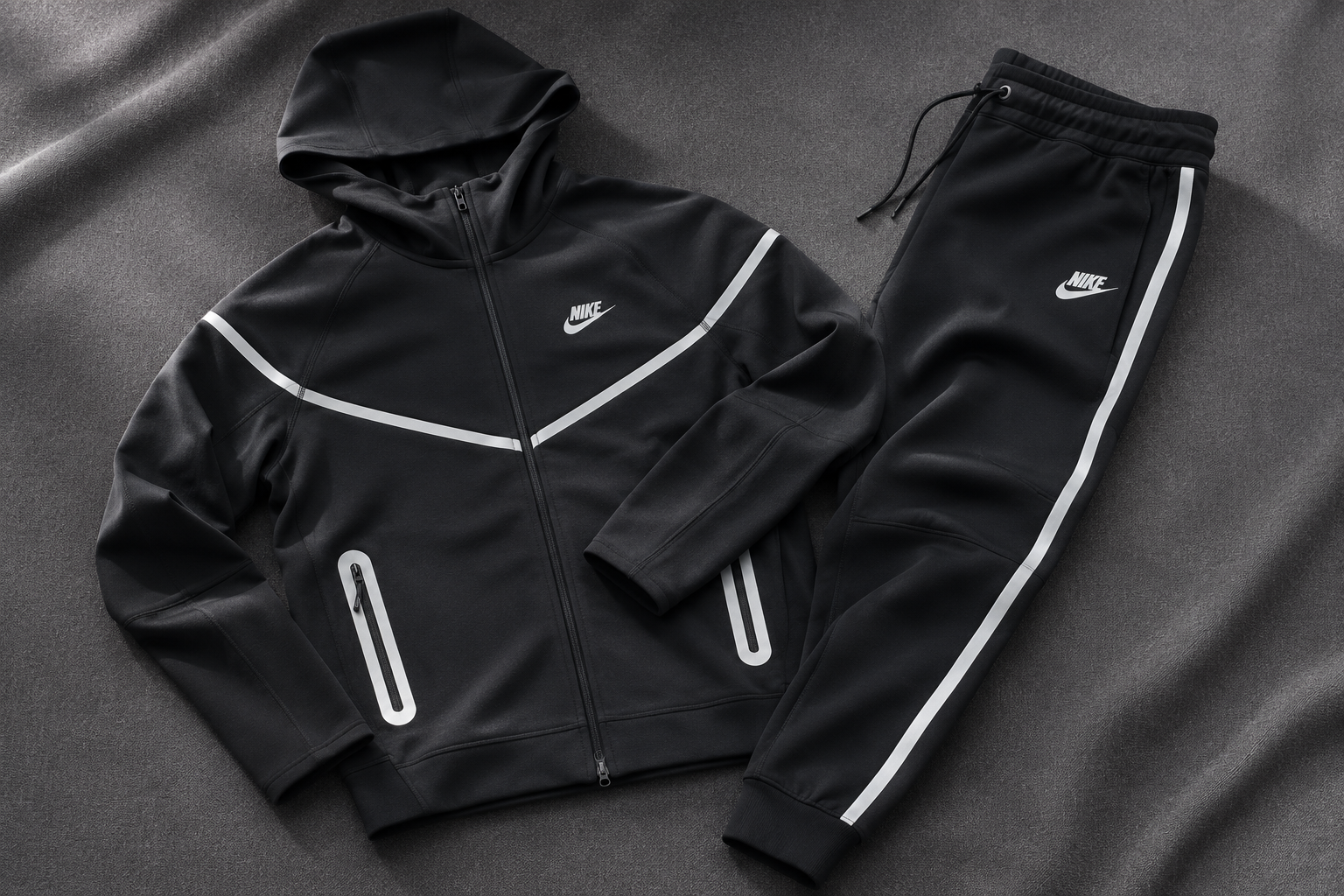
This black track suit uses a dark base with light-colored line accents, drawing attention to the jacket's curved stripes, the pants' side stripes, and zipper details. To plan color, layering, and display around such pieces, start by preserving the black-and-white contrast, then control the overall rhythm through inner layers, footwear, and background. ## Color Relationships in the Image The jacket and pants in the photo are mainly black, with light stripes extending from the jacket's shoulders,
Editor score 4.2 / 5
This black track suit uses a dark base with light-colored line accents, drawing attention to the jacket's curved stripes, the pants' side stripes, and zipper details. To plan color, layering, and display around such pieces, start by preserving the black-and-white contrast, then control the overall rhythm through inner layers, footwear, and background.
Color Relationships in the Image
The jacket and pants in the photo are mainly black, with light stripes extending from the jacket's shoulders, chest, and hem area, and continuing along the pants' side seams to create a continuous visual echo. Black lowers the overall color intensity, while the light stripes provide clear outlines, so there's no need to add too many highly saturated colors.
Three styling approaches work well:
- Black inner layer with black sneakers, letting the light stripes be the only prominent decorative lines.
- Gray or off-white inner layer that echoes the stripes, good for adding depth, but avoid large complex prints.
- If adding colorful shoes or a hat, keep it to one small color accent to avoid breaking the suit's cohesive feel.
Which Details to Highlight in Display

When laying flat, place the jacket as the main subject, keep the zipper visible, and let the hood spread naturally to show the hooded structure and front placket lines. The pants can be placed diagonally or vertically beside it, aligning the side stripes with the light decorations on the jacket.
Details like the jacket's zippered pockets near the cuffs, pants pockets, drawstring waistband, and elastic cuffs are easy to overlook but add depth. When displaying, don't flatten the clothes completely; leave some natural folds to give the sleeves, hood, and legs more dimension, but avoid excessive stacking at the hem or legs, which would hide the lines and stitching.
Suitable Layering for Styling
The set already includes two main layers: the hooded jacket and pants. The inner layer should be simple: a plain crew-neck T-shirt, thin long-sleeve, or a plain athletic top. The inner layer shouldn't show too much, to avoid weakening the recognition of the jacket's chest and shoulder decorations.
Shoe options based on direction:
- Black-and-white sneakers: continue the set's contrast, most cohesive.
- All-black shoes: make the light stripes the main focal point, sharper look.
- Gray shoes: add a soft transition between black and light colors, good if you don't want too strong a contrast.
The hooded jacket works well with a baseball cap, simple beanie, or other minimal headwear. If using both a hat and a boldly patterned inner layer, the visual information becomes too much; keep only one as the focus.
Choosing Images and Styling Decisions
From the flat-lay, you can directly judge the arrangement of the black body, light stripes, hood shape, zipper, pockets, waistband, and cuffs, as well as the decorative echo between jacket and pants. The image cannot determine fabric composition, thickness, breathability, wearing comfort, fit, post-wash performance, durability, specific model, or logo authenticity, so don't draw conclusions on those from the flat-lay alone.
If using this outfit for everyday styling, prioritize controlling the number of colors, keep the inner layer simple, and let the shoes echo the light stripes appropriately. For clothing display, ensure the chest logo, jacket zipper, cuff pockets, side stripes, and elastic cuffs are not folded or overlapped and hidden.