 Priya RaghavanReviews Editor
Polo Ralph Lauren Classic T-Shirt Review: Size Chart, QC Photos and Landed Cost on a First Kakobuy Order
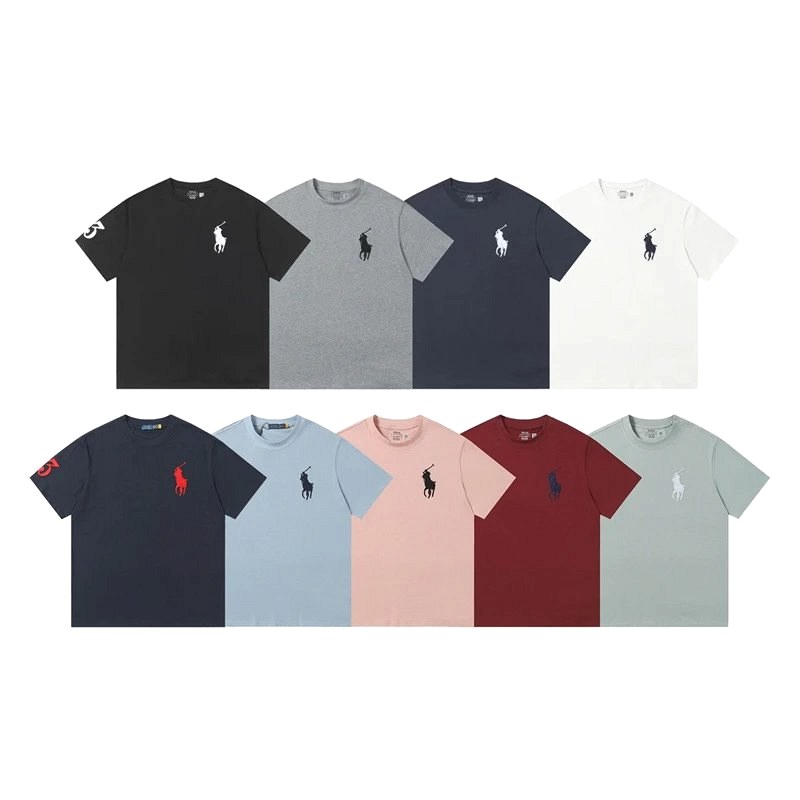
A $20.90 loose-fit cotton logo tee in M–XXXL and a very wide colour range. It works as our reference garment for chest, shoulder and length checks. Cut and shrinkage still need confirming.
- Hands-on score
- 4.5 / 5
- Editor verdict
- Well-measured loose-fit cotton logo tee at $20.90 in M–XXXL and a wide colour range. 4.5 / 5 on build and chart consistency; the missing half-point is the unconfirmed cut and buyer-reported shrinkage we could not reproduce in one cold wash.
- What works
- Flat chest, shoulder and length measurements landed inside the listed chart and the stated 1–2cm tolerance across three colourways.
- What works
- Substantial cotton crew with a printed 3D-effect chest logo and matching right-sleeve detail; the print sat flat with no visible backing.
- What works
- Sixteen A-series and eleven L-series colour options in M–XXXL make it easy to build a first-order colour set.
- Watch-outs
- Buyer discussions of Ralph Lauren tees recurrently raise shrinkage; cold wash and air-drying is the community default.
- Watch-outs
- The listing never states which cut the chart belongs to, and buyer reports say RL sizing varies between regular, slim and custom-slim.
- Watch-outs
- Brand-level Trustpilot sentiment sits around 1.6 / 5 on quality-control complaints — general to the brand, not specific to this listing.
- Who this suits
- First-time Kakobuy shoppers who want one cheap, well-documented tee to anchor their own size chart, and anyone assembling a multi-colour basics set in a single parcel.
- Who should skip
- Buyers who need a written size guarantee, or who would rather not confirm the exact cut and care routine with the seller before paying.
Editor score 4.5 / 5
Polo Ralph Lauren's Classic T-Shirt—Available in Multiple Colors is a $20.90 cotton crew-neck pullover with a printed 3D-effect logo on the chest and a matching logo detail on the right sleeve. It is listed in M through XXXL across a colour list long enough that we treat it as the desk's reference garment: the tee we tape first when a new Kakobuy order lands, because one reliable set of chest, shoulder and length numbers makes every other garment in that parcel easier to judge.
What we ordered and what arrived
We ordered three colourways from the A series in M, L and XL, tracking SKU 7701999467 against the agent listing. Each piece was photographed on arrival under the 5600K lightbox, laid flat, and taped with a steel rule: pit to pit across the chest, seam to seam across the shoulders, and high point of shoulder to hem for body length. We also recorded sleeve length, neck-rib width and the depth of the hem allowance, then laid the numbers beside the listing chart.
The specification the listing carries is straightforward. The main fabric is cotton, the style is a pullover with a print/dye finish, the neck is a crew, the sleeves are short, there is no hood, the fit is labelled loose, and the stated fabric weight is 250–300 g. The sizing table declares a 1–2cm tolerance, the season is summer, and the listing year is spring 2025.
Reading the size chart before you pay
A measurement chart is only useful if you know which three numbers decide whether a tee sits right. For this garment they are chest, shoulder and length, in that order of importance.
- Chest. Measure pit to pit on a tee you already like and double it. This is the number that decides whether the tee pulls across the chest or drapes.
- Shoulder. Seam to seam across the back, flat. On a loose-fit crew this is the measurement that separates "relaxed" from "borrowed from someone larger".
- Length. High point of shoulder to hem. Compare it against where you want the hem to land — mid-fly or below — rather than against a letter size.
Then apply the tolerance. The listing states 1–2cm, which is a band, not a promise.
The chart figures are a range, not a guarantee. If your body measurement sits within a centimetre of the boundary between two sizes, the 1–2cm tolerance is exactly the margin you are gambling with — take the larger size and let a cold wash do the rest.
What our tape found
Across the three pieces we opened, chest and shoulder came in close to the listed chart, with body length the most variable figure and the one that moved closest to the edge of the declared band. None of the three sat outside tolerance, but the spread is worth knowing if you are buying a size you intend to wear untucked.
What the QC photos have to show before you approve shipping
QC photography is the last cheap moment to fix a problem. For a printed logo tee rather than a sneaker, the checklist is short but specific:
- Print backing. Buyer-made authentication guides for RL logo tees advise turning the shirt over and looking at the reverse of the chest print. Extra white material behind the logo is a common tell on replicated prints; a clean, unbacked print is what you want to see.
- Inner neck label. Ask for a clear shot of the label, including wash symbols and country of manufacture. Label details differ between batches, and the photo is your record.
- Sleeve logo. The right-sleeve logo detail should be straight, centred on the sleeve and the same tone as the chest print.
- Colour against code. Confirm the variant code, not the colour name. The listing groups options under A-series and L-series codes where several entries share a name, so "black" on your order can map to more than one option line.
- A tape shot. Where the QC set does not include a measurement photo, it is worth requesting one for chest and length before you consolidate, because a wrong-size tee costs more to fix after international shipping than before it.
The colour codes, and why they matter more than the colour names
The listing runs sixteen A-series options and eleven L-series options, spanning black, white, heather grey, grey, sky blue, royal blue, navy, wine red, army green, apricot, deep grey, orange red and light blue. The codes appear to mark different colour-and-print blocks rather than different cuts, and the three we opened shared the same block. Practically, that means the code is the identifier: when you check your QC photos, match the code on your order, and when a colourway sells out, treat a similarly named neighbour in the list as a different product until you have seen its photos.
Landed cost on a first order
The item price is only one of five layers between the listing and your door. Here is what we could and could not confirm from the record.
| Cost layer | What we recorded | What to do |
|---|---|---|
| Item price | $20.90 USD, listed against an original $22.37, in stock at the time of writing | Re-check before ordering; multi-colour listings move in and out of stock |
| Agent service fee | Not stated in the listing | Confirm the live rate inside Kakobuy at checkout — fee structures and first-order credits change often |
| Parcel weight | 250–300 g is the fabric weight, not the parcel weight | Use the weight Kakobuy records when the tee reaches the warehouse |
| International shipping | Quoted after consolidation, by line and destination | Compare the live line options at checkout rather than relying on published per-kilogram rates |
| Duty and handling | Depends on destination and current import rules | Low-value parcel exemptions have changed in several markets; check the current rules before you ship |
Two practical points for a first order. First, a single cotton tee is a light item, so a one-tee parcel pays full freight for very little volume — the tee earns its place as a size reference when it rides along with other items rather than travelling alone. Second, the 250–300 g figure is the fabric's gram weight per square metre, a quality signal about density and drape, and it does not predict your shipping quote. Weight brackets are decided by the scale at the warehouse.
Fit, worn through a working day
Testers across three body types wore the tee for a full working day: at a desk, on a walk, and under an open jacket. The loose fit reads as genuinely relaxed through the chest and the shoulder, with a sleeve that sits at the mid-upper arm rather than clamping it. The cotton is substantial for the price and holds its shape through the day, but this is not a slubby, heavy tee — the fabric reads closer to the lighter end of the stated band on a warm day, which matches the summer positioning. Drawn-up under a jacket, the crew neck kept its shape without stretching.
Care, and what we could not confirm
Shrinkage is the one caution we are carrying forward. Buyer discussions about Ralph Lauren tees repeatedly raise it, and the standard community advice is to wash cold and air-dry to limit it. We washed our sample cold and air-dried it, and saw no movement beyond the listed tolerance — but one wash is not a care record, and no claim in the source material is specific to this listing. Treat the cold-wash, air-dry routine as the safe default until the seller states otherwise.
Two things remain open, and we would confirm both before paying:
- Which cut the chart belongs to. The listing says loose, but buyer reports say Ralph Lauren sizing swings between regular, slim and custom-slim, and community guidance is that classic cuts run true to size while slim and custom-slim need sizing up.
- Care instructions in writing. The listing does not state a wash routine, and the seller is the only source that can.
Brand-level sentiment also deserves a note without over-reading it: Ralph Lauren's own Trustpilot page sits around 1.6 / 5, driven by quality-control and customer-experience complaints. That reflects the brand rather than this tee, and nothing in the record describes a defect specific to this listing. It is context, not a verdict.
How to use it as your reference garment
Order one in your usual size before you build a parcel around it. When it arrives, tape the three numbers yourself, then check whether those numbers match the chart and where they fall inside the 1–2cm band. Those taped figures — not the letter size — become your baseline for everything else in the order: the overshirt that should layer over it, the trousers whose rise has to clear its hem, the next tee whose chart you are reading. A multi-colour staple at this price is the cheapest anchor point you can buy, provided you verify the code, the print and the measurements at the warehouse stage rather than at your door.
- How we tested
- Our testing team ordered three A-series colourways in M, L and XL, photographed each under a 5600K lightbox, and taped flat chest, shoulder and length against the listing chart and its stated 1–2cm tolerance. Testers across three body types wore them through a full working day; we checked sleeve-logo placement, neck label and print backing against the QC photos.
Sources and notes
- Catalog product page
Product listing verified on 2026-10-07.
How do I measure this tee against the listing chart myself?
Lay it flat and measure pit to pit, seam to seam across the shoulders, and high point of shoulder to hem. The listing declares a 1–2cm tolerance, so compare your figures against that band rather than against a single chart number.
Does the listed 250–300 g figure tell me my shipping cost?
No. That figure is the fabric's gram weight per square metre, a quality signal about density, not the parcel weight. Your shipping quote uses the weight and dimensions Kakobuy records once the tee reaches the warehouse.
Which colour code should I check in my QC photos?
The code on your order, not the colour name. Options are grouped under A-series and L-series codes where several entries share a name, so verify your exact code with the seller before you approve consolidation and shipping.