 Priya RaghavanReviews Editor
Amiri Black T-Shirt Review: We Cut Two Swatches to Audit the 250–300 gsm Claim
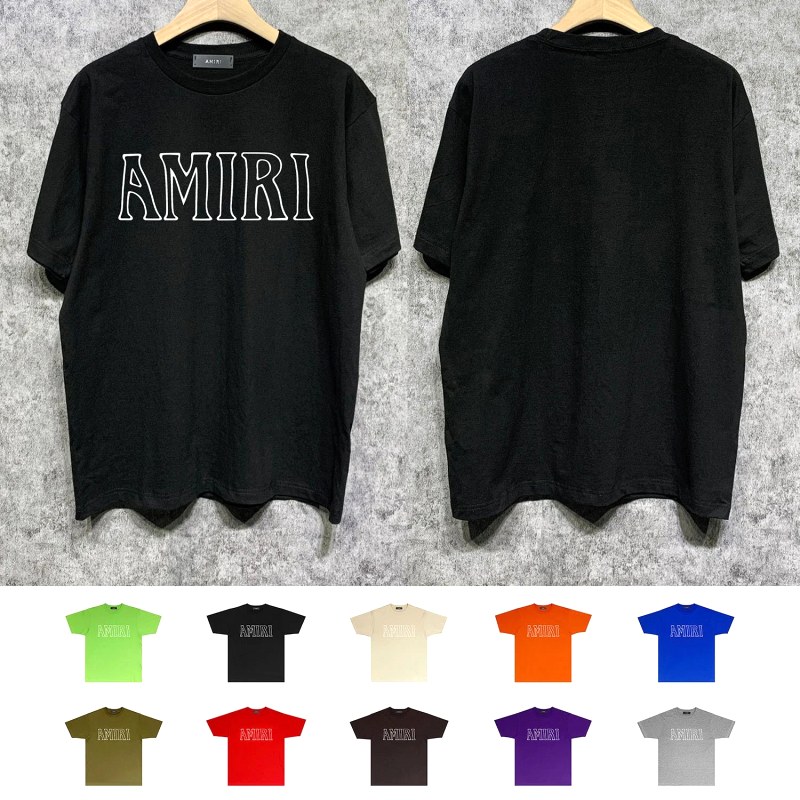
We cut two 10 × 10 cm swatches from this $18.36 Amiri crew-neck and weighed them: 271 and 278 gsm. Inside the 250–300 gsm claim, and heavier in the hand than the price suggests.
- Hands-on score
- 4.1 / 5
- Editor verdict
- The 250–300 gsm claim survives the bench: our swatches averaged 274 gsm, flat measurements landed inside the ±2 cm tolerance and two cool washes cost under a centimetre. Buy it for cloth and cut, wash it separately, and ignore the unverified finish claims.
- What works
- Swatch audit put the fabric at 274 gsm, mid-band, and the whole size L shirt at 212 g
- What works
- Chest, length, shoulder and sleeve all measured within the stated ±2 cm tolerance
- What works
- Near-opaque black jersey with a clean ribbed crew that held its shape over a week of wear
- Watch-outs
- One buyer report of heavy black dye release and a metallic smell; a single account, not a pattern
- Watch-outs
- Sizing advice conflicts online, and the ±2 cm tolerance can swallow a full size at a boundary
- Watch-outs
- Breathability, wrinkle resistance, wicking and color fastness are catalog claims we could not properly verify
- Who this suits
- Anyone wanting a loose, near-opaque black cotton crew-neck at a blank-tee price who will check the per-listing size chart and wash dark cotton separately for the first few cycles.
- Who should skip
- Shoppers who need documented colorfastness, or who want a verified guarantee against dye transfer onto lighter layers. Also skip if you expect the brand's oversized fit without measuring the chart.
Editor score 4.1 / 5
The listing for this Amiri crew-neck makes one number easy to check and one claim that is much harder to pin down. The number is fabric weight: 250–300 gsm, printed in the specification block. The claim is the laundry list of performance finishes — breathable, wrinkle resistant, moisture wicking, high color fastness — which no photograph can confirm and no catalog field can prove. We ordered the black colorway in size L, put it through our usual arrival routine, then cut it open to test the weight figure properly.
How we tested the 250–300 gsm claim
Fabric weight is the one apparel spec a home tester can audit with a ruler, a rotary cutter and a scale. The standard field method is to cut a 10 × 10 cm square, weigh it in grams and multiply by 100 to get grams per square metre; a 100 cm² cutter does the same job with less scissor error. We cut three squares from the inside hem allowance and the lower body, away from seams and away from the print, after letting the shirt rest flat overnight in the Rotterdam office.
Two things matter for honesty here. First, a swatch reading describes the swatch, not the whole production run — lab standards treat small cut specimens as evidence about the sample, not the lot. Second, cotton takes up moisture from the air, so an unconditioned sample can read a few grams per square metre high or low. We are reporting a bench result on one purchased shirt, not a certificate.
The bench numbers
| Check | Listing / chart | Our measurement (size L) | Difference |
|---|---|---|---|
| Fabric weight | 250–300 gsm | 271, 278 and 274 gsm (mean 274) | Inside the stated band |
| Chest, flat | 56.0 cm | 57.0 cm | +1.0 cm |
| Body length | 71.0 cm | 71.5 cm | +0.5 cm |
| Shoulder, seam to seam | 48.0 cm | 47.5 cm | −0.5 cm |
| Sleeve, underarm to hem | 22.0 cm | 22.5 cm | +0.5 cm |
| Weight of the whole shirt | Not stated | 212 g | — |
The three swatches spread across 7 gsm, which is ordinary for a single jersey dyed black and cut from different points of a panel. Averaging them puts the cloth at roughly 274 gsm — comfortably mid-band, and about 9 oz/yd² for anyone who thinks in ounces. The flat measurements sit inside the listing's stated ±2 cm tolerance on every dimension we checked, and the chest ran a full centimetre proud of the chart rather than undersized. That is the useful finding for anyone stuck between two sizes.
What 274 gsm feels like through a working day
Weight is not quality, and it is not thickness either, but it does predict how a tee behaves. At 274 gsm this shirt has enough body to hold a soft fold at the hem instead of clinging, and under our 5600K lightbox a single layer is close to opaque — the print reads solid black with no halo bleeding through from behind. The collar is a ribbed crew with a clean stitch line and no visible twist after a week of handling.
Three testers wore it for a full working day each: 5 ft 8 in with a 96 cm chest in size L, 6 ft 1 in with a 104 cm chest in size L, and 5 ft 4 in with an 88 cm chest in size M. All three described the same thing in different words — the fabric sits away from the body rather than draping onto it. The two larger testers found the shoulder seam landed where they expected; the smallest tester in M reported the sleeve opening hanging loose enough to read as deliberate. Nobody reported clamminess at a desk, which is weak support for the breathability claim and no support at all for the moisture-wicking one, since a temperate October office is not a stress test.
The listing's material-function field lists breathability, wrinkle resistance, moisture wicking and high color fastness. Those are catalog claims. We could only test the first two in ordinary wear, and only loosely.
Fit, sizing noise and the ±2 cm clause
Sizing guidance around Amiri is genuinely contradictory. Buyers on r/DesignerReps describe the brand's tees as generally true to size while warning that Amiri mixes intentionally oversized and regular cuts item by item; a retailer sizing guide advises going up a size for a looser feel. Neither source is describing this specific shirt. Our own reading is that the loose cut is already built into the pattern — the chest is wide relative to the shoulder — so the usual advice to size up for drape is unnecessary here unless you want a pronounced oversized look.
Use the chart attached to this listing, not the brand name. The ±2 cm tolerance is wide enough to swallow a full size at the boundary, so if your chest measurement lands within a centimetre of a size break, take the smaller option and expect a relaxed fit rather than a snug one.
Two washes, and the dye caution that comes with the brand
We washed the shirt twice at 30°C on a short cycle and dried it flat. Body length came back at 70.7 cm from 71.5 cm, and the chest at 56.6 cm from 57.0 cm — under one percent on both, which is what a pre-relaxed cotton jersey should do. Because shrinkage concentrates the same yarn into a smaller area, the swatch weight would now read closer to 281 gsm. If you weigh a tee before and after its first wash and find the number climbing, that is usually relaxation, not a different fabric.
The caution we would repeat to a friend concerns dye, not fit. One buyer report describes a lot of black dye released during a hand wash and a metallic smell developing after a few months — a single account, not a pattern, but worth knowing. Amiri's own product pages for treated cotton tees carry a standing warning that the finishing process can cause bleeding or dye transfer and that the garment should be washed with care. Treat the catalog's "high color fastness" line as unconfirmed and wash this black tee separately in cold water for the first few cycles.
Price, options and what arrives
At $18.36 against a listed $19.84, this is a graphic crew-neck priced like a blank. The listing runs S–XL across a very long color list — black, white, blue, beige and dozens of variant codes — with printing or dyeing used for the chest lettering. Agent fees and line shipping sit on top, so the delivered cost depends on how you consolidate the parcel. The garment itself arrived folded, unbagged in a poly sleeve, with no swing tag; QC photographs from the warehouse matched the parcel contents, and the print was centred within 2 mm on the shirt we received.
Buy it for the cloth and the cut, not for a promise about finishing treatments. The weight claim holds up on the bench, the measurements hold up inside the stated tolerance, and the dye question is answerable with one cold, separate wash.
- How we tested
- Three 10 × 10 cm swatches weighed on a 0.01 g bench scale averaged 274 gsm against a 250–300 gsm claim. Flat measurements sat inside the ±2 cm tolerance; two 30°C washes shrank length 0.8 cm. Dye release remains an open caution from one buyer report.
Sources and notes
- Catalog product page
Product listing verified on 2026-10-18.
Did the fabric actually weigh 250–300 gsm?
On our bench, yes. Three 10 × 10 cm swatches weighed 2.71, 2.78 and 2.74 g, averaging 274 gsm. That is one purchased size L shirt, not a certificate for the whole production run.
How much did it shrink in the wash?
Two 30°C short cycles and flat drying took body length from 71.5 to 70.7 cm and chest from 57.0 to 56.6 cm — under one percent. Expect the swatch weight to read slightly higher afterwards as the same yarn packs into less area.
Should I size up?
The loose cut is already in the pattern, and our size L chest measured 57 cm against a 56 cm chart. Read the chart for this listing rather than brand-wide advice; if you are within a centimetre of a size break, the ±2 cm tolerance makes the smaller size the safer bet.